90 Years of Automotive Clay Modeling
From Harley Earl's pioneering full-scale plaster bucks at General Motors to the digital-physical hybrid studios of the 2020s — every era, every technique, every designer who shaped the art of clay modeling.
What is the history of automotive clay modeling?
Automotive clay modeling began in the 1930s at General Motors under Harley Earl. Designers used industrial styling clay to shape full-size and scale models of concept cars, a process that remained central to car design for decades and is still used today alongside digital tools.
Who started clay modeling in car design?
Harley Earl is widely credited with introducing clay modeling to the automotive industry in the 1930s while leading design at General Motors. His work on the Buick Y-Job and later concepts established clay as the primary medium for developing car forms.
How has clay modeling changed over the decades?
Clay modeling evolved from purely hand-sculpted full-size models in the 1930s–1960s to include scale models, wind-tunnel testing, and later integration with CAD and CNC milling. Today it is often used in a hybrid digital-physical process.
Ready to build your own clay model?
The Design Studio Pro™ course teaches the same techniques used in these studios.
The Founding Era
Birth of the Clay Model
Harley Earl
General Motors Design
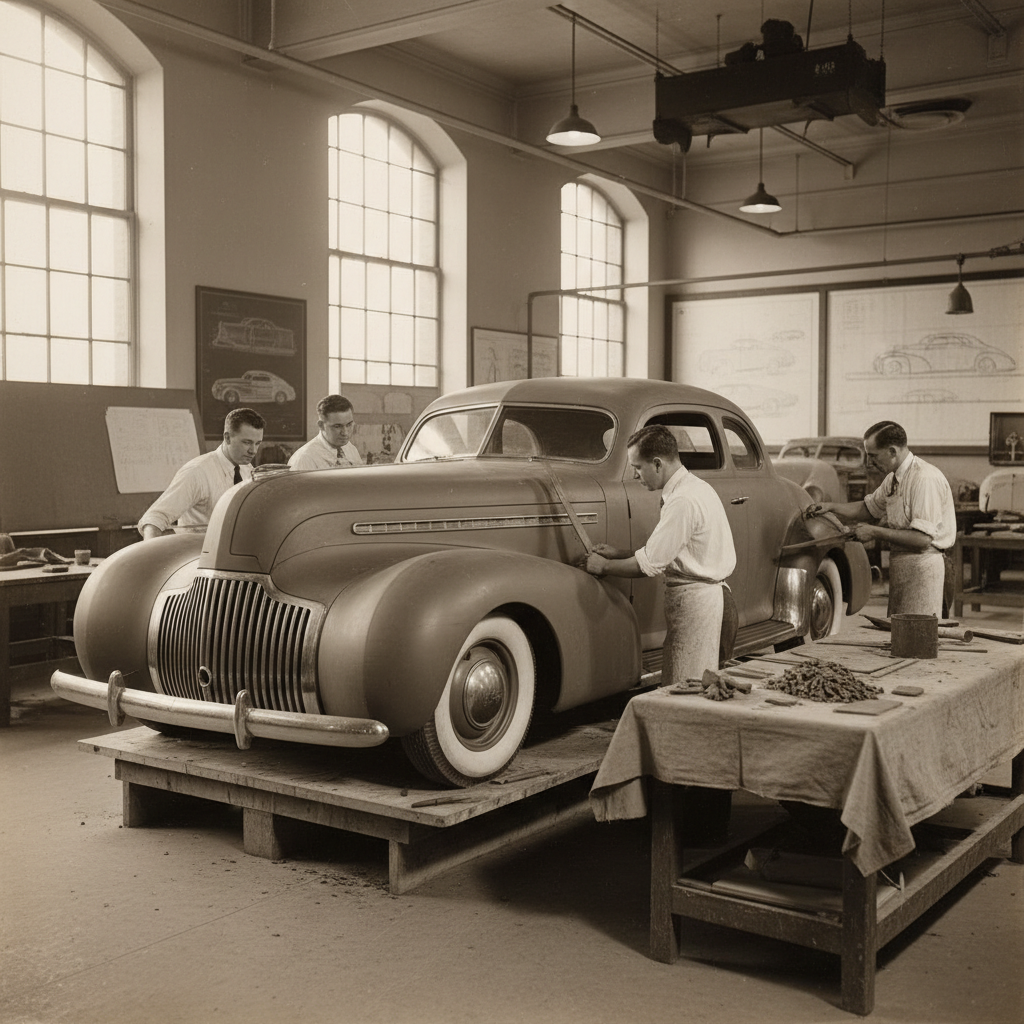
Harley Earl revolutionized automotive design by introducing full-scale clay modeling to General Motors in the early 1930s. Before this, cars were designed primarily through engineering drawings with little aesthetic consideration. Earl's clay studio at GM became the template for every major design department that followed.
Key Milestone
Buick Y-Job (1938) — the world's first concept car, modeled in full-scale clay
The Jet Age
Fins, Chrome & Futurism
Virgil Exner
Chrysler Corporation
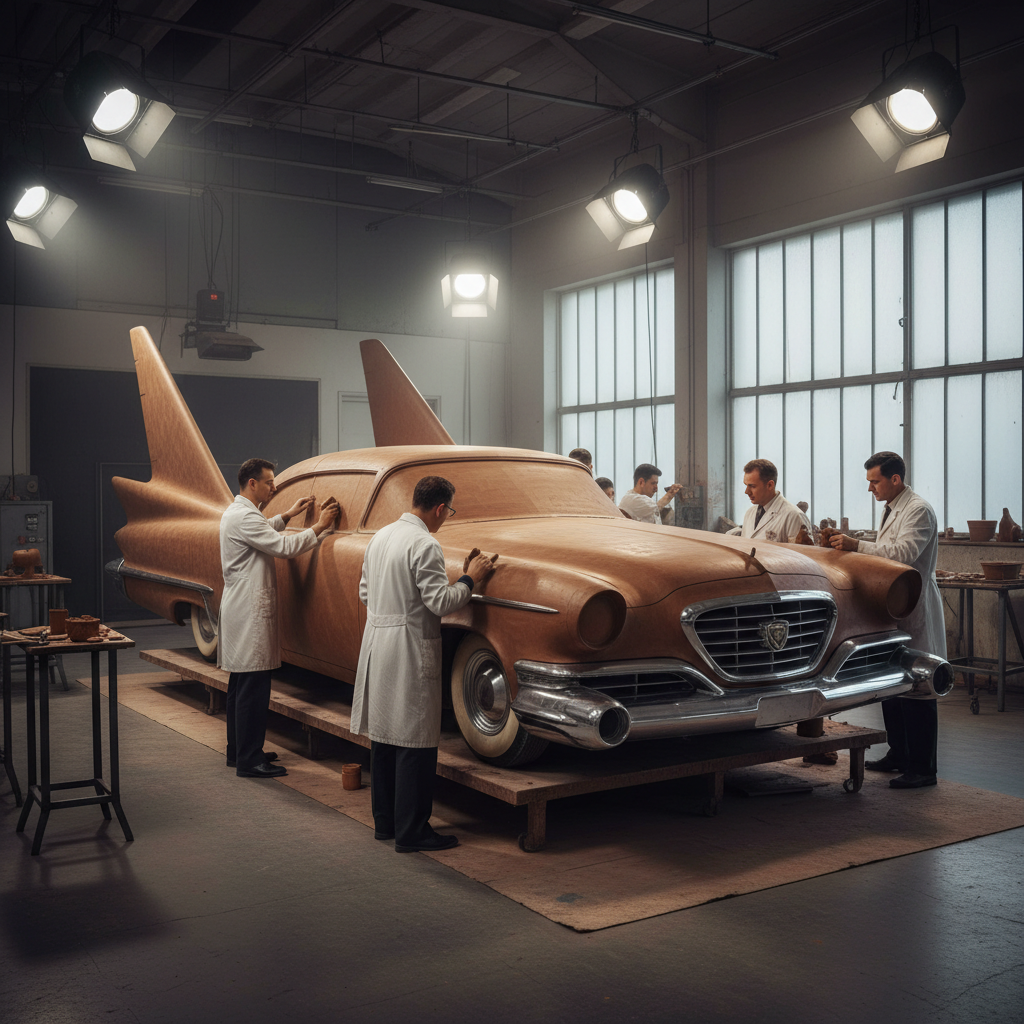
The 1950s saw automotive clay modeling explode with ambition. Inspired by jet aircraft and rocket design, designers at Chrysler, GM, and Ford pushed clay into radical territory — sweeping tail fins, chrome-laden surfaces, and panoramic windshields. Virgil Exner's "Forward Look" at Chrysler became the era's defining visual language.
Key Milestone
Chrysler Norseman (1956) — lost at sea on the Andrea Doria, survived only in clay documentation
The Golden Age
Muscle, Sports Cars & Studio Mastery
Bill Mitchell
GM Design Staff
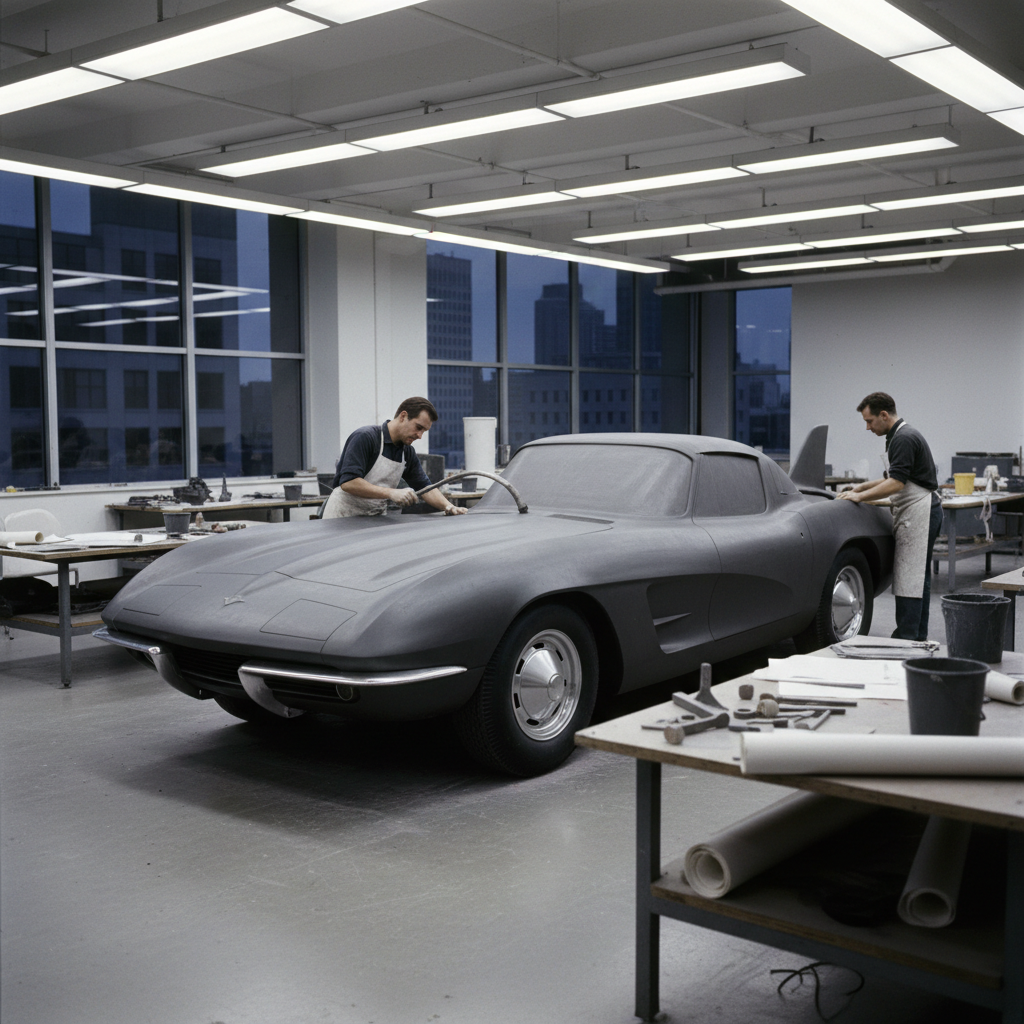
Bill Mitchell succeeded Harley Earl at GM and elevated clay modeling to an art form. The 1960s produced the most celebrated concept cars in automotive history — the Mako Shark, the Stingray, the Toronado. European designers like Pininfarina and Bertone were simultaneously developing their own clay traditions, creating a transatlantic design dialogue.
Key Milestone
Corvette Mako Shark (1961) — painted to match a dead shark from Mitchell's fishing trip
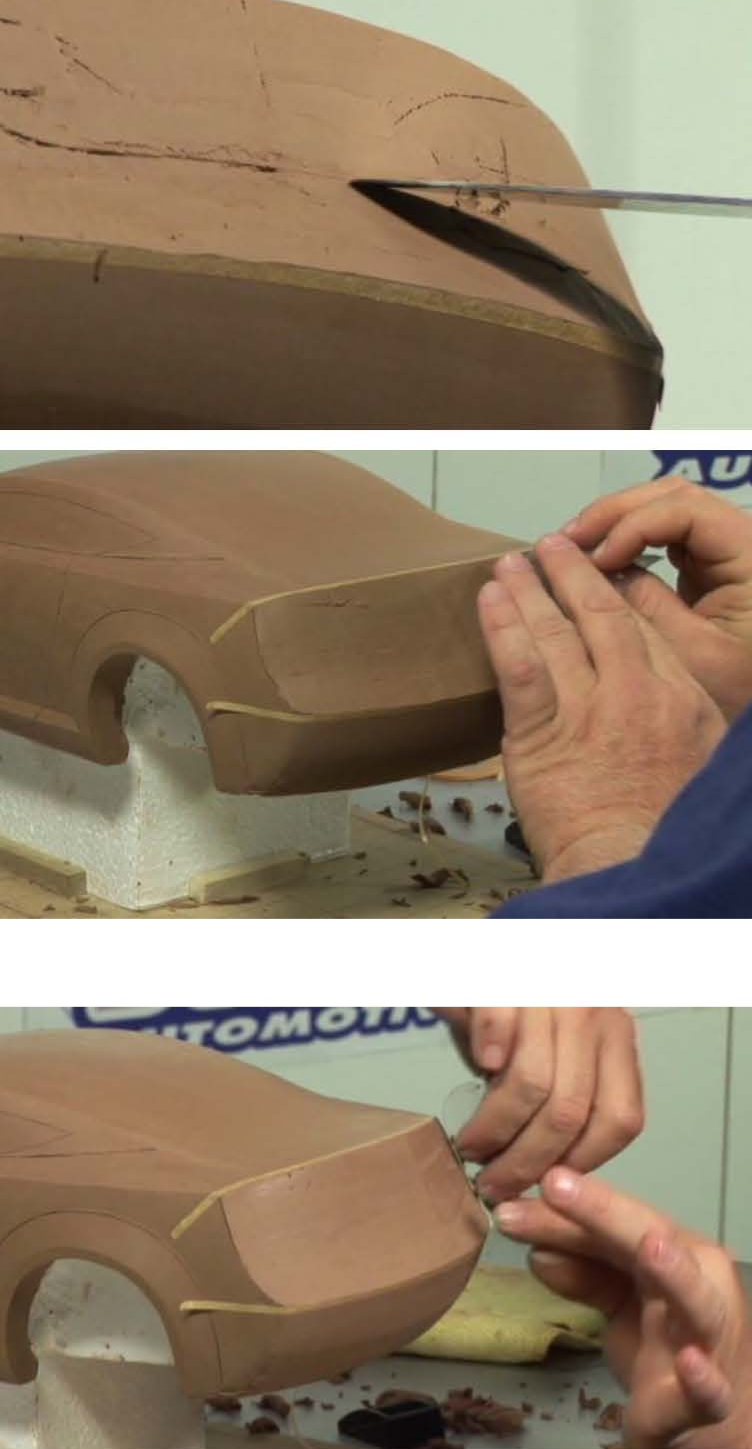
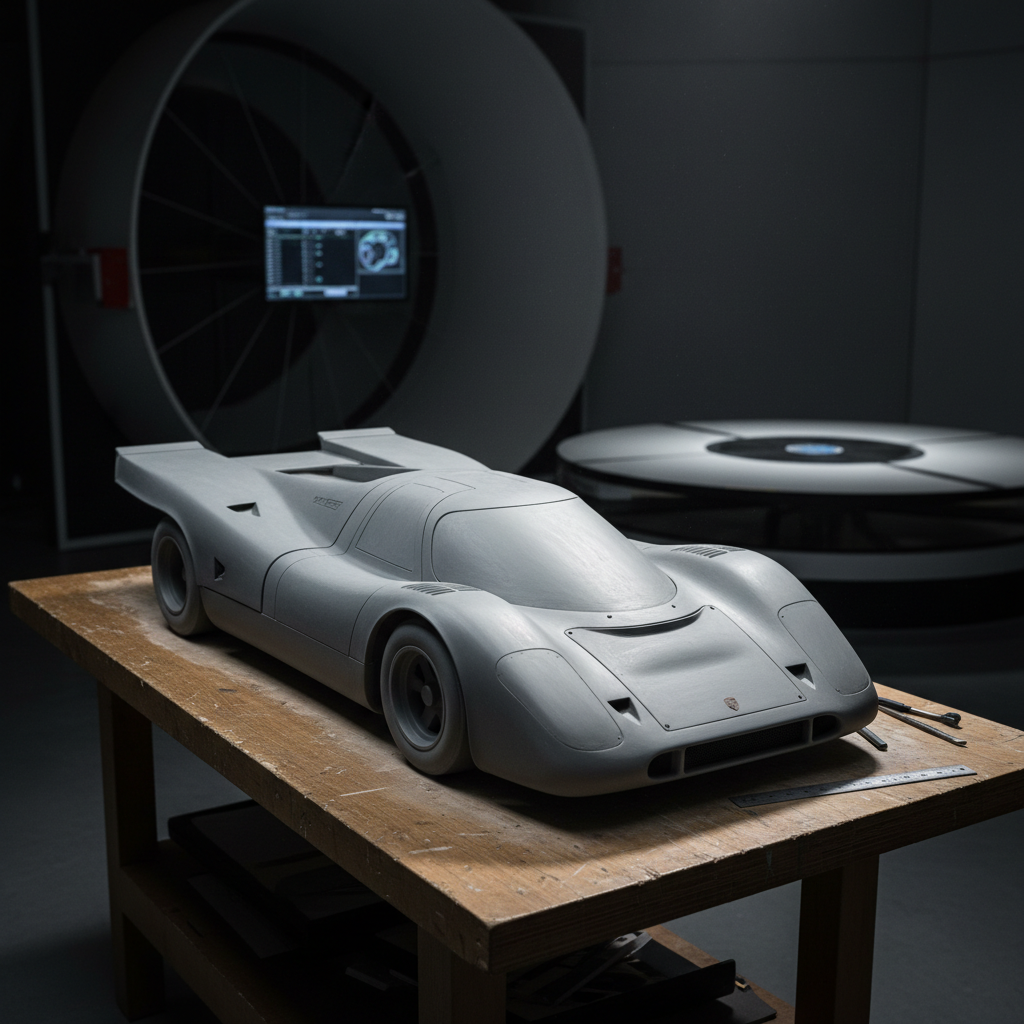
Race Car Clay Design
From Wind Tunnel to Le Mans Winner
Dick Söderberg / Leonardo Fioravanti
Porsche Weissach / Pininfarina
Race car development has always depended on clay modeling — not just for aesthetics, but for aerodynamic problem-solving. The Porsche 917's dangerous lift at 240mph on the Mulsanne straight was solved through clay studies in the Paris wind tunnel. Ferrari's F40 went from clay to 200mph in just 13 months. McLaren's F1 road car clay work was so effective the race version needed minimal modification to win Le Mans outright. Car Styling magazine documented these studios extensively — calling the 917 clay sessions "the most consequential aerodynamic sculpture of the 20th century."
Key Milestone
Porsche 917 clay aerodynamic studies (1970) — solved the lift problem that made the car undriveable at Le Mans speeds
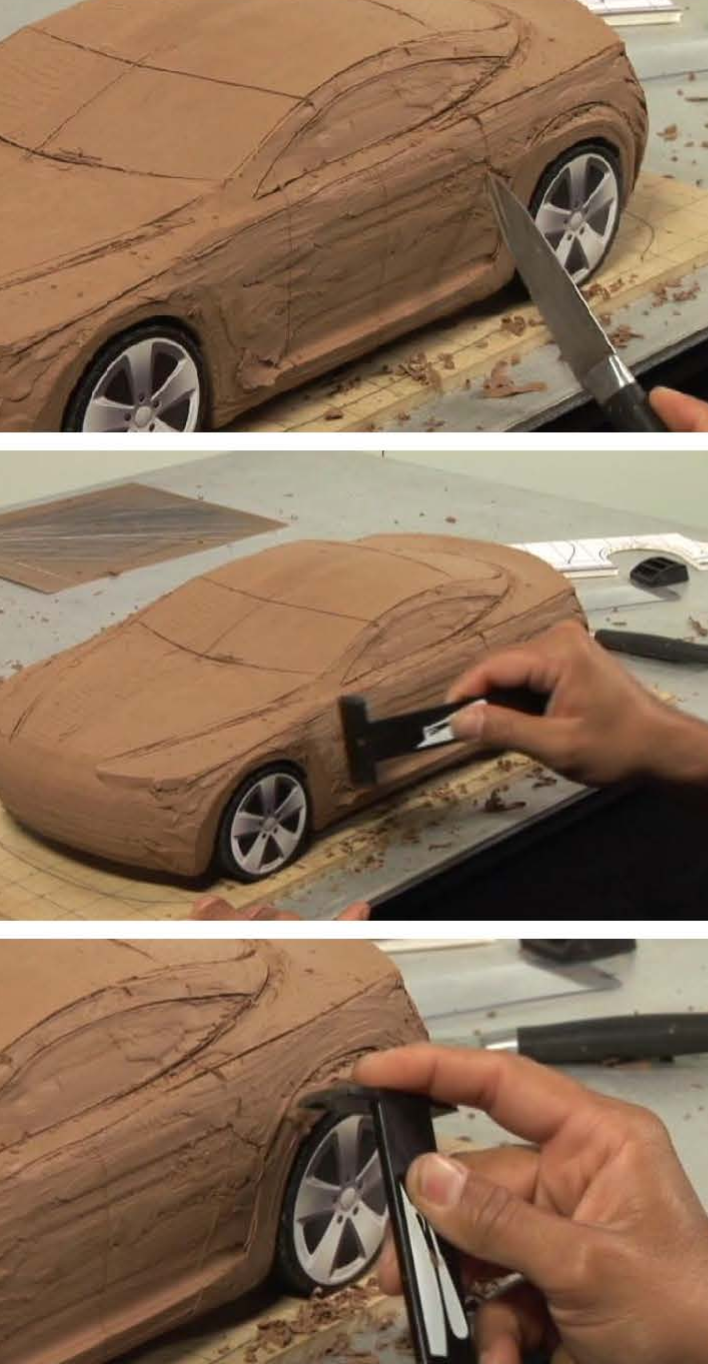
Learn the 1/10 scale clay model technique
Used by Porsche, Ferrari & McLaren — now available as a step-by-step course.
The Digital Transition
CAD Arrives, Clay Adapts
Giorgetto Giugiaro
Italdesign
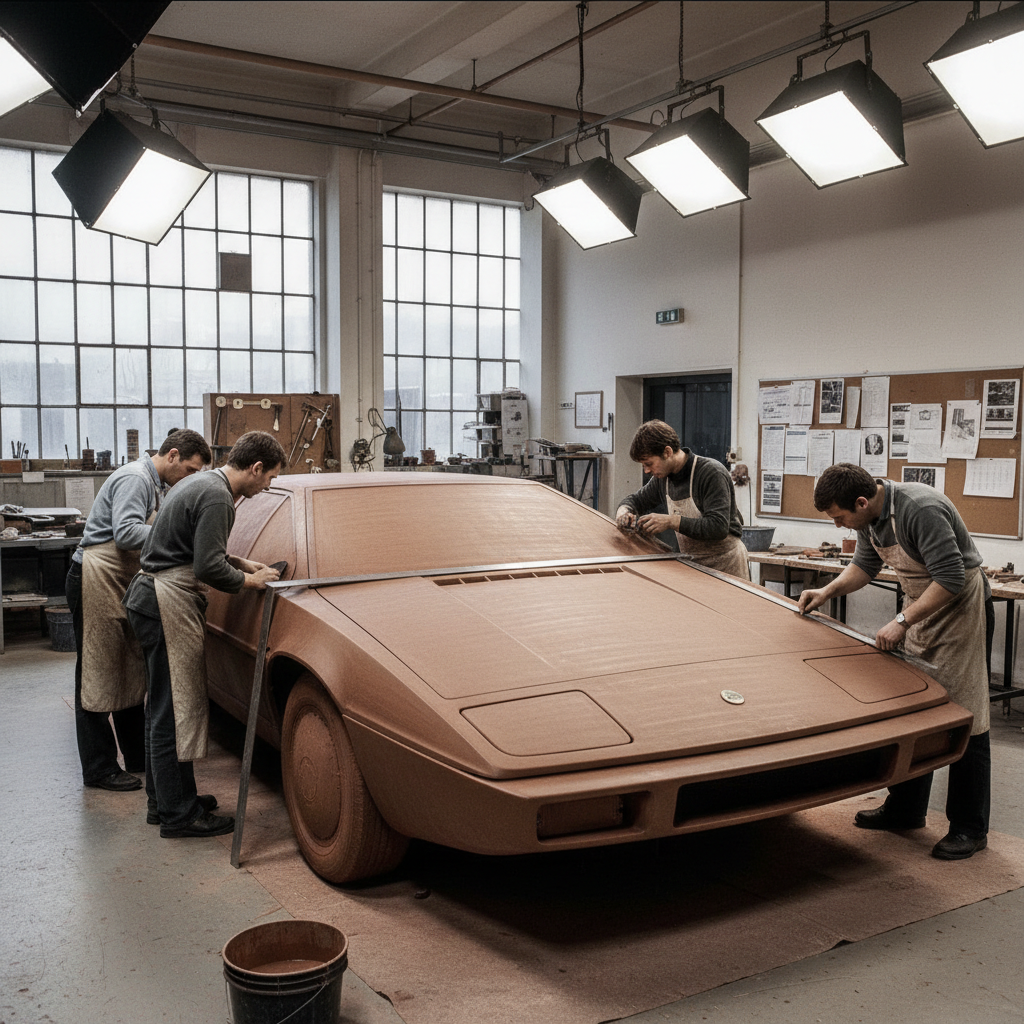
The introduction of Computer Aided Design in the late 1970s threatened to make clay modeling obsolete — but the opposite happened. Designers discovered that CAD and clay were complementary, not competitive. The 1970s and 80s became a period of integration, with studios developing hybrid workflows where digital surfaces were output to CNC for clay verification.
Key Milestone
Lotus Esprit (1972) — Giugiaro's wedge design, drawn in 2D, then clay-modeled in three days
The Concept Car Boom
Clay as Brand Statement
Frank Stephenson
BMW / Ferrari / Fiat
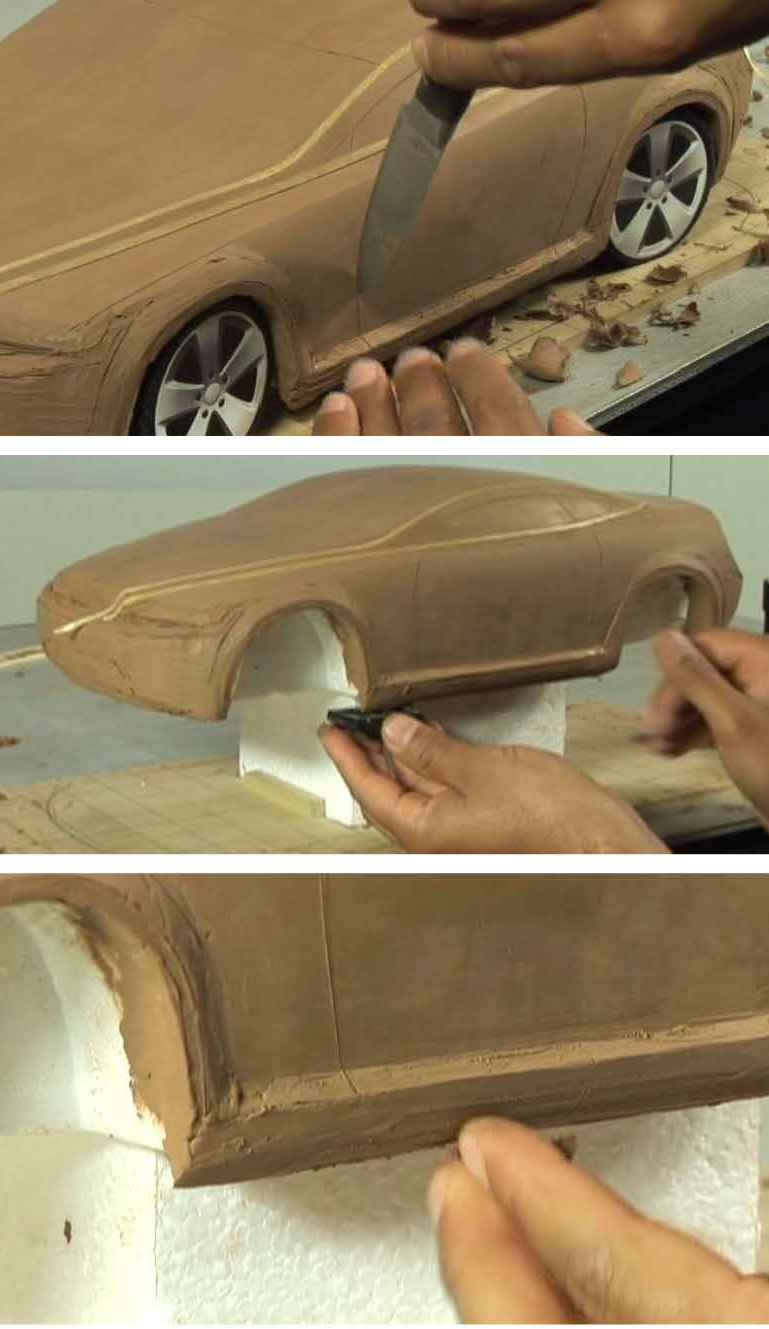
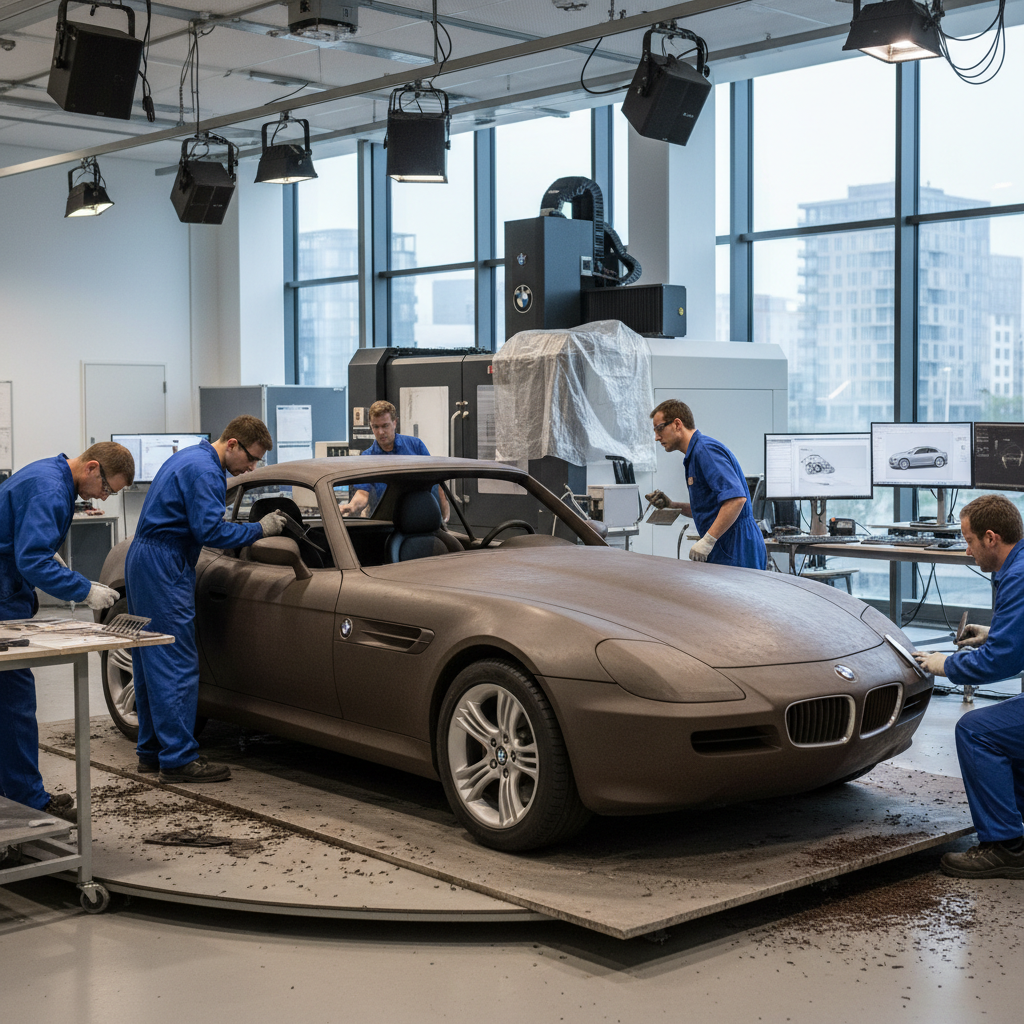
The 1990s saw automotive design studios weaponize concept cars as brand-building tools. Clay modeling became a strategic discipline — studios maintained dedicated concept teams whose sole purpose was to push the brand language into the future. Frank Stephenson's work across BMW, Ferrari, and Fiat defined the decade's aesthetic.
Key Milestone
BMW Z07 Concept (1997) — clay-to-production in 18 months, became the Z8
CNC & Rapid Prototyping
The Machine-Assisted Studio
Chris Bangle
BMW Group Design
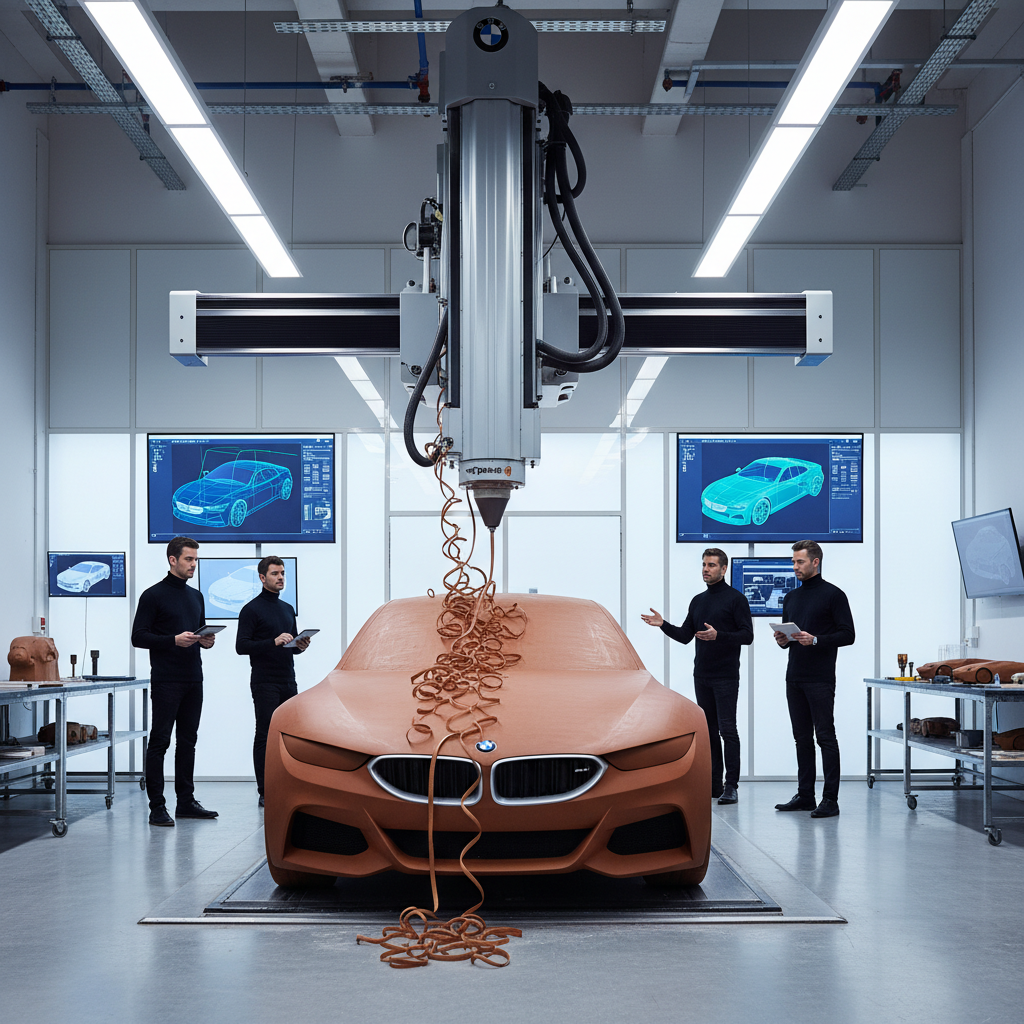
Chris Bangle's controversial "flame surfacing" language at BMW forced clay modelers to develop entirely new skills. CNC milling became standard — a designer would sculpt digitally in Alias, mill a clay block to the data, then hand-refine the surface. The 2000s also saw rapid prototyping (SLA, SLS) emerge as a companion to clay for small-scale detail work.
Key Milestone
BMW GINA Concept (2008) — flexible fabric body explored through extensive clay form studies
Digital-Physical Hybrid
VR, AI & the Enduring Clay Model
Luc Donckerwolke
Hyundai Motor Group Design
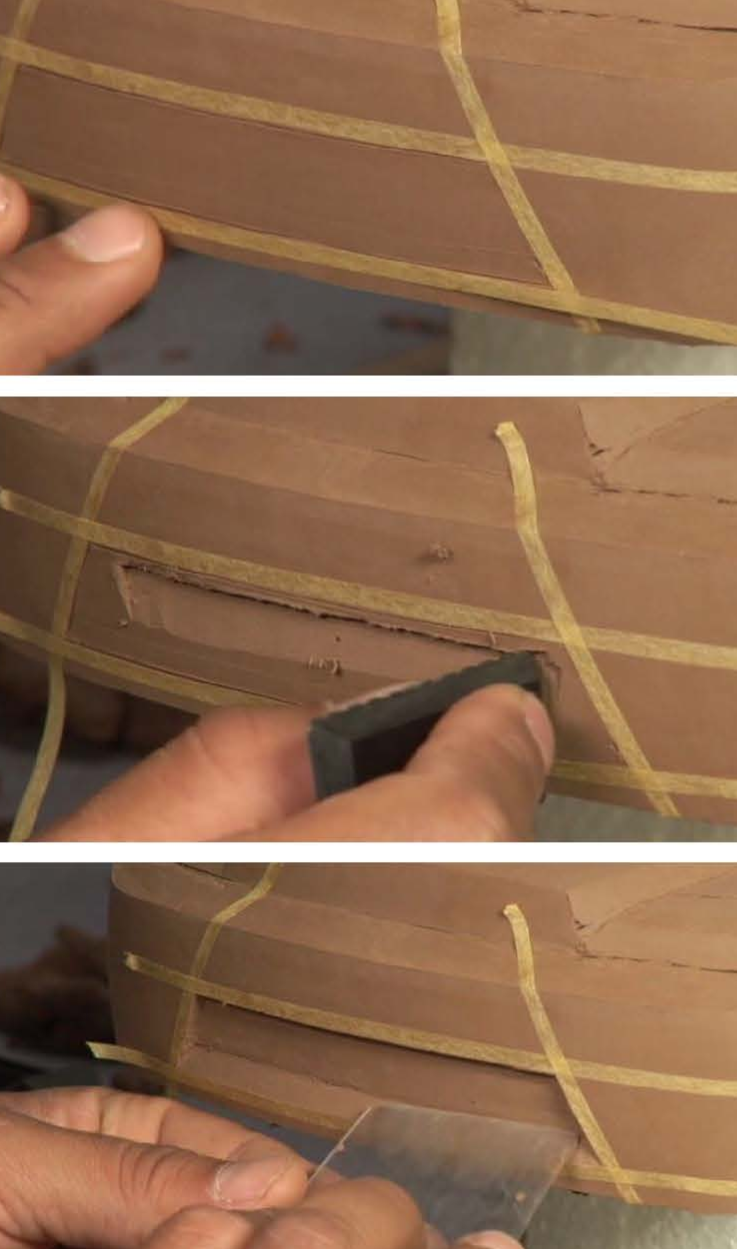
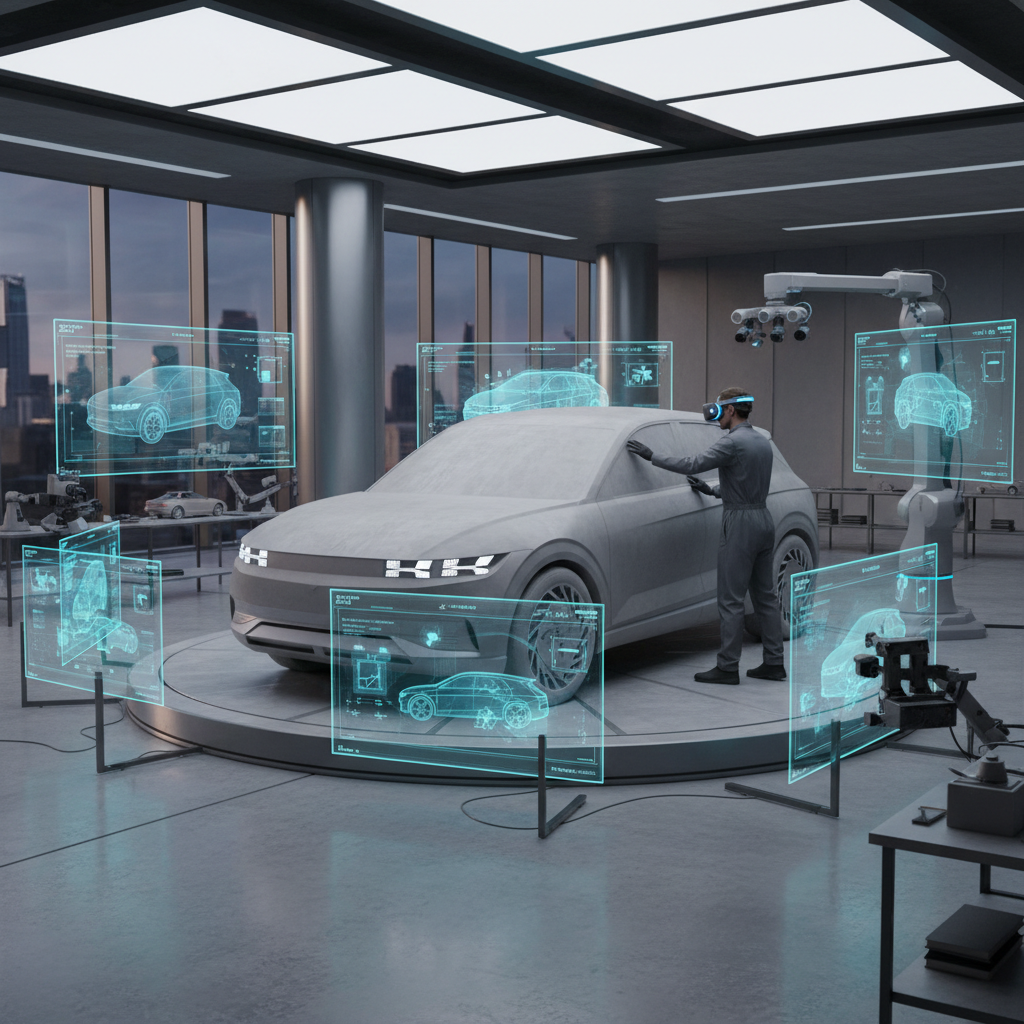
The 2020s brought VR headsets, AI-assisted surface generation, and real-time rendering into automotive design studios — yet clay modeling not only survived but experienced a renaissance. Designers discovered that physical clay provides tactile feedback and spatial understanding that no screen can replicate. Studios like Hyundai, Rivian, and Lucid built new clay facilities alongside their digital infrastructure.
Key Milestone
Hyundai Ioniq 7 Concept (2021) — clay and VR used simultaneously in the same design review
You've reached the present day
Now learn the techniques yourself. The Design Studio Pro™ masterclass teaches you to build a 1/10 scale clay model using the same methods documented throughout this timeline.